Étiquette : generative ai (Page 2 of 5)

OpenAI ends Disney partnership as it closes Sora video-making app

https://ichef.bbci.co.uk/news/1536/cpsprodpb/bf4a/live/a6f433a0-2807-11f1-af73-bd55eb0878e2.jpg.webp

“OpenAI told the BBC on Wednesday that it has discontinued Sora so that it can focus on other developments, such as robotics « that will help people solve real-world, physical tasks. »
A spokesperson for The Walt Disney Company said « we respect OpenAI’s decision to exit the video generation business and to shift its priorities elsewhere ».
Disney will engage with other AI platforms to find ways to responsibly use the technology without infringing on intellectual property rights, a spokesperson said.
OpenAI said it is shutting down both its Sora consumer app and the internet-based platform that professional install to generate videos. The BBC understands that with the closure of Sora, OpenAI will no longer focus on developing video-generation tools.
The firm said it aims to create other forms of advanced AI, including « agentic » technology capable of autonomously completing tasks with little human oversight.”

Source : OpenAI ends Disney partnership as it closes Sora video-making app

When DOGE Unleashed ChatGPT on the Humanities

https://no-flux.beaude.net/wp-content/uploads/2026/03/06cul-neh-lawsuit-06-tmzh-superJumbo.jpg

Building improvements at an Indigenous languages archive in Alaska risked “promoting inclusion and diverse perspectives.” Renewal of a longstanding grant to digitize Black newspapers and add them to a historical database was “D.E.I.” So was work on a 40-volume scholarly series on the history of American music.
A documentary about Jewish women’s slave labor during the Holocaust? The focus on gender risked “contributing to D.E.I. by amplifying marginalized voices.”
Even an effort to catalog and digitize the papers of Thomas Gage, a British general in the American Revolution, was guilty of “promoting inclusivity and diversity in historical research.”
The DOGE employees did not appear to question ChatGPT’s judgments, and continued hunting for unacceptable projects. Two weeks later, they sent a master list of 1,477 problematic awards — nearly every active grant made during the Biden administration — to Michael McDonald, the endowment’s acting chairman.
Mr. McDonald, a veteran of the agency, agreed to let DOGE terminate them, creating what he later described as a “clean slate” for Mr. Trump’s “America First” agenda.

Source : When DOGE Unleashed ChatGPT on the Humanities

AI companies want to use improv actors to train AI on human emotion

https://no-flux.beaude.net/wp-content/uploads/2026/03/268402_AI_companies_want_to_harvest_improv_actors_skills_to_train_large_AI_models_on_human_emotion_and_tone_CVirginia.jpg

““Handshake AI is inviting actors, improvisers, and performers to join a paid, collaborative improv project to work with one of the leading AI companies,” the job description says, promising participants will be “matched with other performers over video and given a light prompt or scenario to explore together.” The job listing calls for people with a background in acting, improv, sketch, or theater work of any kind, and it takes pains to imply — multiple times — that it’s looking for people who can essentially “test the limits of the world’s top LLMs’ understanding” by teaching the models how to recognize or replicate human tone and emotions. “Emotional awareness” is one of the requirements, for instance, specifically the “ability to recognize, express, and shift between emotions in a way that feels authentic and human.” The job listing also called for “interactions that feel grounded, human, and fun to play.””

Source : AI companies want to use improv actors to train AI on human emotion | The Verge

Guerre en Iran : plusieurs médias s’excusent d’avoir publié des photos modifiées par l’IA

https://no-flux.beaude.net/wp-content/uploads/2026/03/61b4199_upload-1-tozj5mixae0h-photos-de-la-guerre-en-iran-modifie-es-avec-l-ia-dans-la-presse-allemande-courrier-international.jpg

“Dans un contexte où “les rédactions subissent d’énormes pressions qui les poussent à publier rapidement”, note la NZZ, et où les IA génératives sont de plus en plus performantes pour produire des images réalistes, de tels incidents risquent de survenir à une fréquence accrue. D’où le rôle crucial de l’Osint − l’enquête en sources ouvertes −, qui va de “la vérification des métadonnées et des recherches d’images inversées à l’analyse de la plausibilité des ombres et des gros plans”.”

Source : Guerre en Iran : plusieurs médias s’excusent d’avoir publié des photos modifiées par l’IA

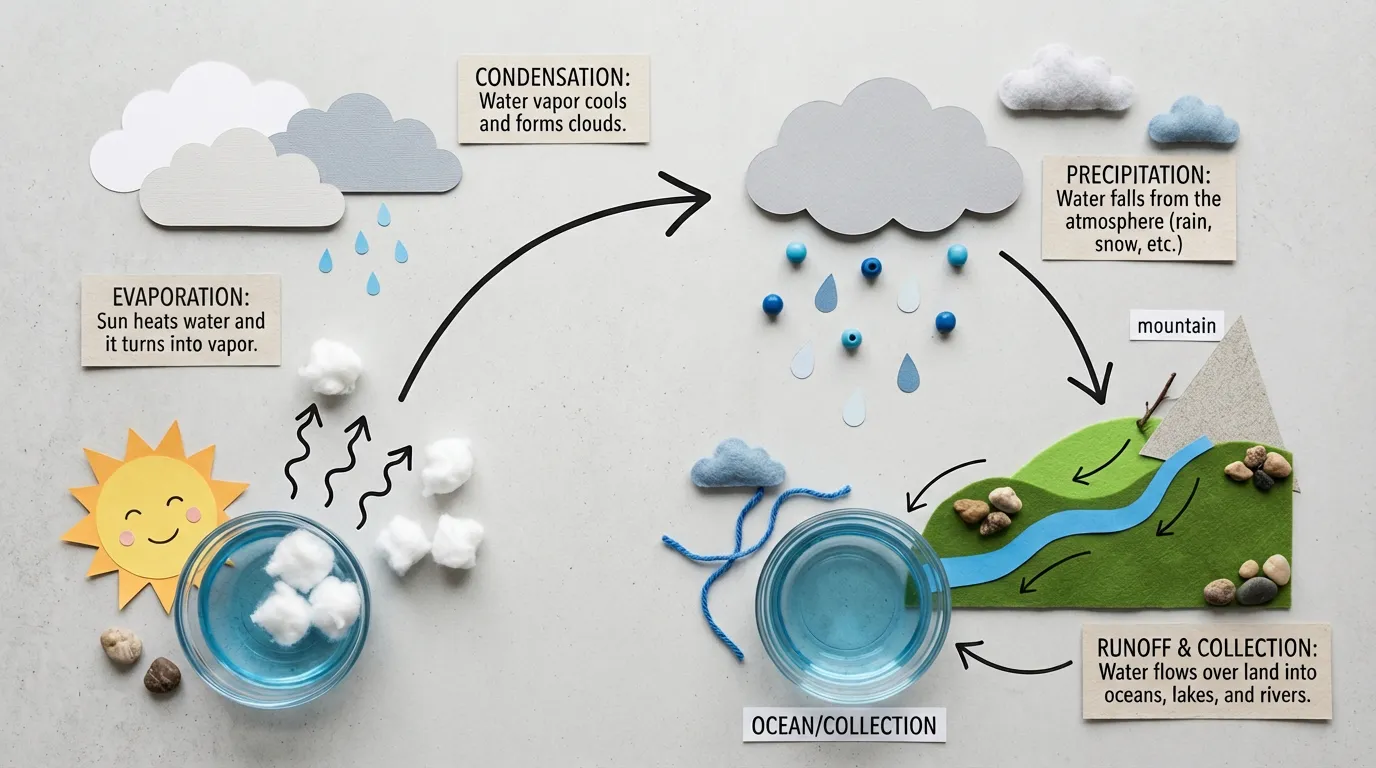
Nano Banana 2: Google’s latest AI image generation model


Nano Banana 2 - Water cycle

“Nano Banana 2 brings the high-speed intelligence of Gemini Flash to visual generation, making rapid edits and iteration possible. It makes once-exclusive Pro features accessible to a wider audience, including: Advanced world knowledge: The model pulls from Gemini’s real-world knowledge base, and is powered by real-time information and images from web search to more accurately render specific subjects. This deep understanding also helps you create infographics, turn notes into diagrams and generate data visualizations. Precision text rendering and translation: Nano Banana 2 allows you to generate accurate, legible text for marketing mockups or greeting cards. You can even translate and localize text within an image to share your ideas globally.”

Source : Nano Banana 2: Google’s latest AI image generation model

Agents conversationnels : l’Autorité s’autosaisit pour avis | Autorité de la concurrence

“L’enquête sectorielle s’intéressera notamment aux thématiques suivantes : L’intégration de la publicité au sein des agents conversationnels : l’Autorité étudiera notamment les modalités d’affichage de ces publicités et le rôle joué par ces dernières dans le modèle économique de ces acteurs. L’intégration des agents conversationnels au sein de services existants : la question des effets de levier et de l’autoréférence sera particulièrement scrutée, ces agents étant mis en œuvre par des acteurs dominants. Les partenariats noués par les éditeurs d’agents conversationnels La transformation des agents conversationnels en plateformes : les agents conversationnels sont plus que de simples interfaces de questions réponses et tendent à devenir de véritables plateformes, permettant aux utilisateurs d’accéder directement à des services tiers sans quitter la fenêtre de conversation.En revanche, la relation entre les agents conversationnels et les moteurs de recherche ne fait pas partie du champ de l’avis.”

Source : Agents conversationnels : l’Autorité s’autosaisit pour avis | Autorité de la concurrence

Deloitte allegedly cited AI-generated research in a million-dollar report for a Canadian provincial government

https://no-flux.beaude.net/wp-content/uploads/2025/12/GettyImages-2219338782-e1764016531575-scaled.jpg

“The Deloitte report contained false citations, pulled from made-up academic papers to draw conclusions for cost-effectiveness analyses, and cited real researchers on papers they hadn’t worked on, the Independent found. It included fictional papers coauthored by researchers who said they had never worked together. “Deloitte Canada firmly stands behind the recommendations put forward in our report,” a Deloitte Canada spokesperson told Fortune in a statement. “We are revising the report to make a small number of citation corrections, which do not impact the report findings. AI was not used to write the report; it was selectively used to support a small number of research citations. […] The Canadian government spent just under $1.6 million on the report””

Source : Deloitte allegedly cited AI-generated research in a million-dollar report for a Canadian provincial government | Fortune

Une start-up de 8 employés publie 3 000 podcasts par semaine, générés par IA

“Pour Inception Point AI, les « influenceurs IA » constituent « la prochaine frontière à un milliard de dollars », dans la mesure où ils peuvent travailler tout le temps, sans avoir besoin de dormir, et offrent « une qualité supérieure à ~1/25000 du coût » d’un influenceur humain. Un épisode de podcast ne leur coûterait en effet que 1 $ seulement. Ce qui leur permet de privilégier la quantité à la qualité, d’autant qu’il suffit de 20 auditeurs pour qu’un épisode soit rentable. Et tant pis si les yeux de certaines de ces influenceuses synthétiques sont quelque peu bâclés.”

Source : Une start-up de 8 employés publie 3 000 podcasts par semaine, générés par IA – Next

« Older posts Newer posts »

© 2026 no-Flux

Theme by Anders Noren — Up ↑