Étiquette : deep fake (Page 2 of 3)

AI Scambaiters: O2 creates AI Granny to waste scammers’ time

“O2 has created human-like Daisy, an AI ‘Granny’ to answer calls in real time from fraudsters, keeping them on the phone and away from customers for as long as possible. With Daisy revealing how you’re not always speaking to the person you think you are, O2 is urging customers to remain vigilant, leave ‘scambaiting’ to the AI experts and report suspected fraudulent calls and texts for free to 7726”

Source : Youtube – O2 – AI Scambaiters: O2 creates AI Granny to waste scammers’ time

Comment se défendre face au cyberharcèlement ? L’avocat Alexandre Archambault nous explique

https://next.ink/wp-content/uploads/2024/09/ecole.webp

“Porter plainte au civil, comme l’a fait cette enseignante, a plusieurs avantages : lorsqu’on est bien conseillé, cela permet de maîtriser la procédure. Ça permet aussi d’obtenir l’identification des harceleurs au bout de quelques semaines – dans certaines affaires, Twitter a ainsi dû identifier plus de 600 internautes ayant retweeté un doxxing, Google faire remonter l’identification de comptes Gmail, Instagram et Wikipedia ont aussi dû opérer des identifications…”

Source : Comment se défendre face au cyberharcèlement ? L’avocat Alexandre Archambault nous explique – Next

An update on our approach to tackling intimate image abuse – Microsoft On the Issues

“We have heard concerns from victims, experts, and other stakeholders that user reporting alone may not scale effectively for impact or adequately address the risk that imagery can be accessed via search. As a result, today we are announcing that we are partnering with StopNCII to pilot a victim-centered approach to detection in Bing, our search engine. StopNCII is a platform run by SWGfL that enables adults from around the world to protect themselves from having their intimate images shared online without their consent. StopNCII enables victims to create a “hash” or digital fingerprint of their images, without those images ever leaving their device (including synthetic imagery). Those hashes can then be used by a wide range of industry partners to detect that imagery on their services and take action in line with their policies.”

Source : An update on our approach to tackling intimate image abuse – Microsoft On the Issues

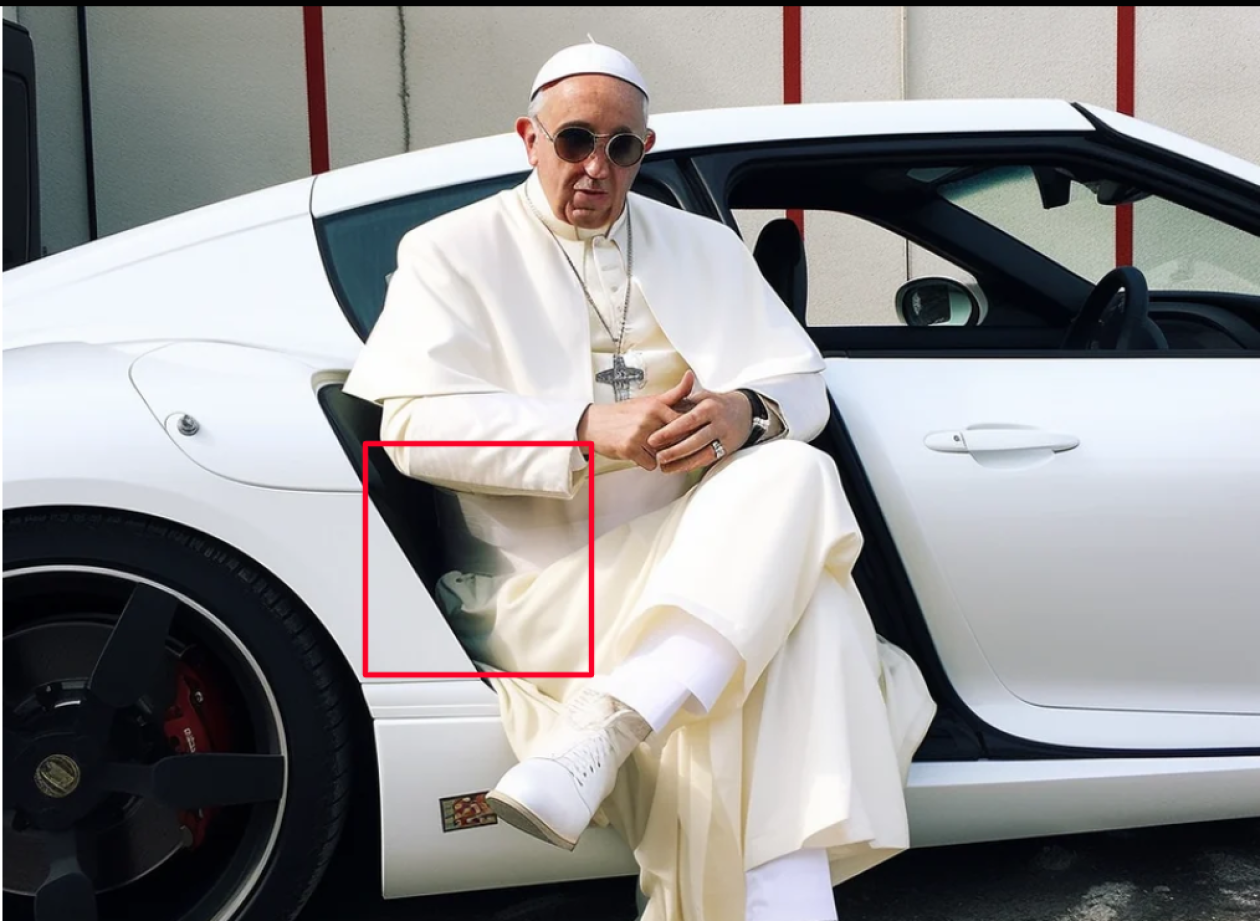
Comment reconnaître une image générée par le logiciel Midjourney ?

https://no-flux.beaude.net/wp-content/uploads/2023/04/848045b_1679919125316-screenshot-2023-03-27t141123-445.png

“La sophistication de plus en plus avancée de ces outils promet un monde dans lequel distinguer une véritable photo d’une création informatique sera quasi impossible, quand ce n’est pas déjà le cas. Alors que mettre en scène le pape François dans des situations décalées est devenu depuis ces derniers jours l’une des activités les plus à la mode sur le forum Reddit, quelques indices permettent encore, parfois, de ne pas se faire avoir.”

Source : Comment reconnaître une image générée par le logiciel Midjourney ?

Pause Giant AI Experiments: An Open Letter

“Contemporary AI systems are now becoming human-competitive at general tasks,[3] and we must ask ourselves: Should we let machines flood our information channels with propaganda and untruth? Should we automate away all the jobs, including the fulfilling ones? Should we develop nonhuman minds that might eventually outnumber, outsmart, obsolete and replace us? Should we risk loss of control of our civilization? Such decisions must not be delegated to unelected tech leaders. Powerful AI systems should be developed only once we are confident that their effects will be positive and their risks will be manageable. This confidence must be well justified and increase with the magnitude of a system’s potential effects. OpenAI’s recent statement regarding artificial general intelligence, states that « At some point, it may be important to get independent review before starting to train future systems, and for the most advanced efforts to agree to limit the rate of growth of compute used for creating new models. » We agree. That point is now.

Source : Pause Giant AI Experiments: An Open Letter – Future of Life Institute

L’intelligence artificielle pour modifier sa voix : « Pour un être humain, la différence va devenir impossible à détecter »

https://no-flux.beaude.net/wp-content/uploads/2023/03/e3e262e_1679063483563-pixels-voix-ia-2.jpg

“Signe de la démocratisation de ces techniques : les voix « imitées » ne sont plus simplement celles de célébrités. Celles d’anonymes, récupérées depuis du contenu posté publiquement sur les réseaux sociaux, peuvent être utilisées pour mettre en œuvre un nouveau type d’arnaque, visant à extorquer de l’argent à partir d’une simple conversation téléphonique. Le Washington Post raconte ainsi le cas de parents ayant reçu un appel de quelqu’un se faisant passer pour leur enfant et les implorant de leur envoyer de l’argent.”

Source : L’intelligence artificielle pour modifier sa voix : « Pour un être humain, la différence va devenir impossible à détecter »

Intel Introduces Real-Time Deepfake Detector

real time deepfake detector

“As part of Intel’s Responsible AI work, the company has productized FakeCatcher, a technology that can detect fake videos with a 96% accuracy rate. Intel’s deepfake detection platform is the world’s first real-time deepfake detector that returns results in milliseconds.
Most deep learning-based detectors look at raw data to try to find signs of inauthenticity and identify what is wrong with a video. In contrast, FakeCatcher looks for authentic clues in real videos, by assessing what makes us human— subtle “blood flow” in the pixels of a video. When our hearts pump blood, our veins change color. These blood flow signals are collected from all over the face and algorithms translate these signals into spatiotemporal maps. Then, using deep learning, we can instantly detect whether a video is real or fake.  ”

Source : Intel Introduces Real-Time Deepfake Detector

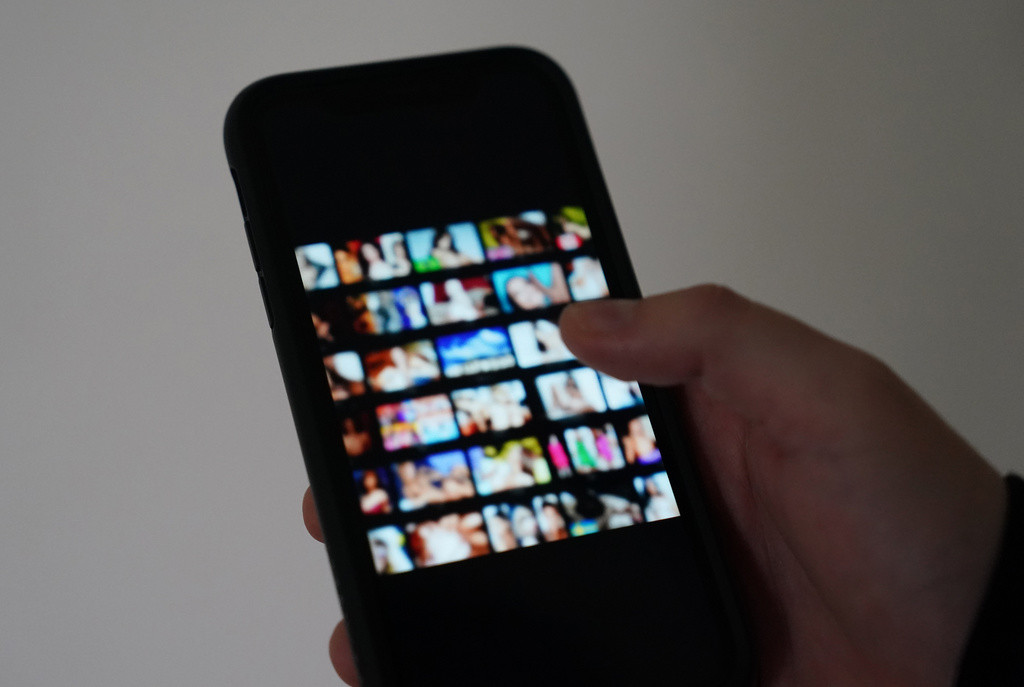
Sur Internet, la prolifération de « deepfakes » pornographiques embarrasse professionnels et régulateurs

D’après une étude nééerlandaise, 96 % des deepfakes en circulation sur Internet sont des détournements pornographiques.

“DeepFaceLab est un outil de création de deepfakes. Ses concepteurs, qui ont publié en libre accès leur code sur la plate-forme GitHub, estiment que la quasi-totalité des vidéos deepfakes créées le sont aujourd’hui avec ce logiciel. Sur leur page, on y trouve de nombreux exemples : le visage du milliardaire Elon Musk intégré au film Interstellar, l’acteur Arnold Schwarzenegger rajeuni, le chef de l’Etat nord-coréen Kim Jong-un en plein laïus sur la préservation de la démocratie… Mais aussi, plus bas, un lien vers MrDeepFakes, un site pornographique.”

Source : Sur Internet, la prolifération de « deepfakes » pornographiques embarrasse professionnels et régulateurs

The latest marketing tactic on LinkedIn: AI-generated faces

LinkedIn Fake

“At first glance, Ramsey’s profile looks like many others on LinkedIn: the bland headshot with a slightly stiff smile; a boilerplate description of RingCentral, the software company where she says she works; and a brief job history. She claims to have an undergraduate business degree from New York University and gives a generic list of interests: CNN, Unilever, Amazon, philanthropist Melinda French Gates. But there were oddities in the photo: the single earring and strange hair, the placement of her eyes, the blurry background. Alone, any of these clues might be explained away, but together, they aroused DiResta’s suspicions […].

That chance message launched DiResta and her colleague Josh Goldstein at the Stanford Internet Observatory on an investigation that uncovered more than 1,000 LinkedIn profiles using what appear to be faces created by artificial intelligence.”

Source : The latest marketing tactic on LinkedIn: AI-generated faces : NPR

« Older posts Newer posts »

© 2026 no-Flux

Theme by Anders NorenUp ↑