“In this short video, hear from Google leaders and AI experts as they introduce you to Gemini — Google’s largest and most capable AI model. It’s built from the ground up to be multimodal — meaning that it’s trained to recognize, understand and combine different types of information, including text, images, audio, video and code. And it’s optimized in three different sizes: Ultra, Pro and Nano. Welcome to the Gemini era.”
via Google
Étiquette : artificial intelligence (Page 8 of 26)

“After Google quietly scrapped a set of in-person events to launch Gemini, its biggest artificial intelligence initiative in a decade, the company has planned a virtual preview of the new AI as soon as this week, said a person with knowledge of the situation. By giving journalists and software developers a first look at some of the technology’s capabilities, Google could relieve some pressure from investors to prove it can catch up to ChatGPT creator OpenAI. Google representatives for weeks have been giving private demonstrations of the technology to business partners but they have said that cloud customers wouldn’t get access to the primary version of Gemini until next year.”
Source : Google Preps Public Preview of Gemini AI After Postponing In-Person Launch Events — The Information
We ran a series of experiments to measure the energy efficiency and carbon emissions of different models from the HuggingFace Hub, and to see how different tasks and models compare. We found that multi-purpose, generative models are orders of magnitude more energy-intensive than task-specific systems for a variety of tasks, even for models with a similar number of parameters
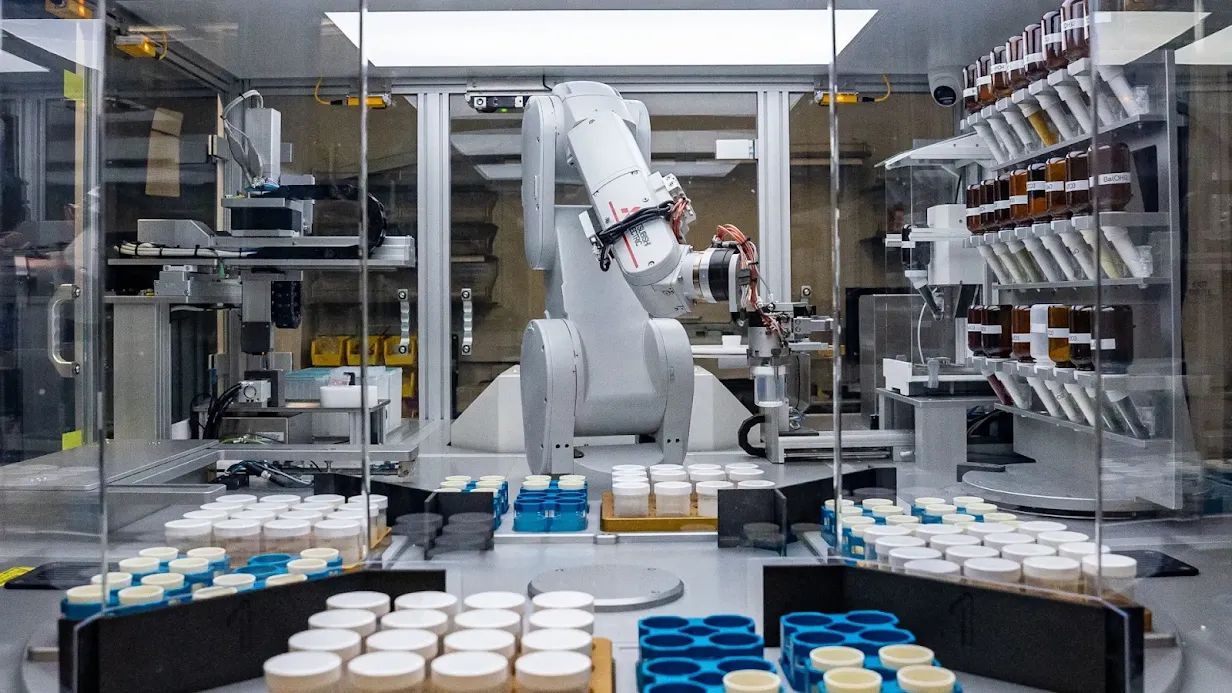
“To build a more sustainable future, we need new materials. GNoME has discovered 380,000 stable crystals that hold the potential to develop greener technologies – from better batteries for electric cars, to superconductors for more efficient computing.Our research – and that of collaborators at the Berkeley Lab, Google Research, and teams around the world — shows the potential to use AI to guide materials discovery, experimentation, and synthesis. We hope that GNoME together with other AI tools can help revolutionize materials discovery today and shape the future of the field.”
Source : Millions of new materials discovered with deep learning – Google DeepMind

« Artificial intelligence (AI) and related machine learning (ML) technologies are increasingly influential in the world around us, making it imperative that we consider the potential impacts on society and individuals in all aspects of the technology that we create. To these ends, the Context in AI Research (CAIR) team develops novel AI methods in the context of the entire AI pipeline: from data to end-user feedback. The pipeline for building an AI system typically starts with data collection, followed by designing a model to run on that data, deployment of the model in the real world, and lastly, compiling and incorporation of human feedback ».
Source : Responsible AI at Google Research: Context in AI Research (CAIR)
“Our ability to adapt to massive change depends on what practitioners call “metacognition” and “meta-skills”. Metacognition means thinking about thinking. In a brilliant essay for the Journal of Academic Perspectives, Natasha Robson argues that while metacognition is implicit in current teaching – “show your working”, “justify your arguments” – it should be explicit and sustained. Schoolchildren should be taught to understand how thinking works, from neuroscience to cultural conditioning; how to observe and interrogate their thought processes; and how and why they might become vulnerable to disinformation and exploitation. Self-awareness could turn out to be the most important topic of all.
Meta-skills are the overarching aptitudes – such as self-development, social intelligence, openness, resilience and creativity – that help us acquire the new competencies that sudden change demands. Like metacognition, meta-skills can be taught.”
“Artificial intelligence image tools have a tendency to spin up disturbing clichés: Asian women are hypersexual. Africans are primitive. Europeans are worldly. Leaders are men. Prisoners are Black.
These stereotypes don’t reflect the real world; they stem from the data that trains the technology. Grabbed from the internet, these troves can be toxic — rife with pornography, misogyny, violence and bigotry.”
Source : AI generated images are biased, showing the world through stereotypes – Washington Post
“Grok is designed to answer questions with a bit of wit and has a rebellious streak, so please don’t use it if you hate humor!A unique and fundamental advantage of Grok is that it has real-time knowledge of the world via the 𝕏 platform. It will also answer spicy questions that are rejected by most other AI systems.Grok is still a very early beta product – the best we could do with 2 months of training – so expect it to improve rapidly with each passing week with your help.”
Source : Announcing Grok
“In this short consensus paper, we outline risks from upcoming, advanced AI systems. We examine large-scale social harms and malicious uses, as well as an irreversible loss of human control over autonomous AI systems. In light of rapid and continuing AI progress, we propose urgent priorities for AI R&D and governance. ”

“To support the safety of highly-capable AI systems, we are developing our approach to catastrophic risk preparedness, including building a Preparedness team and launching a challenge.
The team will help track, evaluate, forecast and protect against catastrophic risks spanning multiple categories including:
- Individualized persuasion
- Cybersecurity
- Chemical, biological, radiological, and nuclear (CBRN) threats
- Autonomous replication and adaptation (ARA)”
Source : Frontier risk and preparedness