“The Academy of Motion Picture Arts and Sciences has clarified that only acting and writing for films done by humans will be considered eligible to win an Oscar.The academy, which controls the US film industry’s most prestigious award, on Friday issued updated rules for what kind of work in movies and documentaries would be considered eligible for an Oscar as the use of artificial intelligence (AI) technology grows.In updated eligibility requirements, the Academy specified that only acting « demonstrably performed by humans » and that writing « must be human-authored » in order to be nominated for an award.”
Étiquette : artificial intelligence (Page 2 of 32)
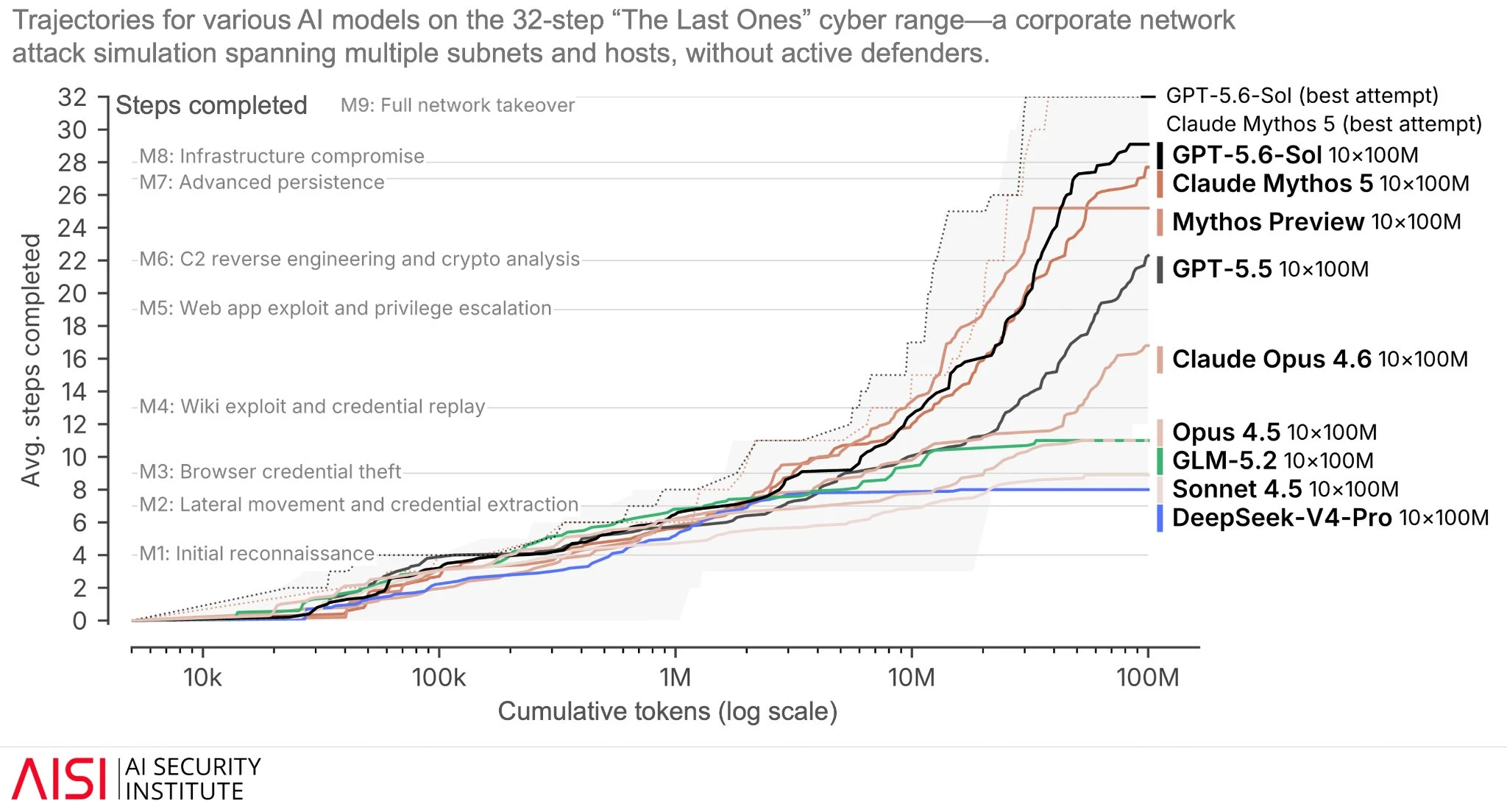
“GPT-5.5 works best when prompts define the outcome and leave room for the model to choose an efficient solution path. Compared with earlier models, you can often use shorter, more outcome-oriented prompts: describe what good looks like, what constraints matter, what evidence is available, and what the final answer should contain.
Avoid carrying over every instruction from an older prompt stack. Legacy prompts often over-specify the process because earlier models needed more help staying on track. With GPT-5.5, that can add noise, narrow the model’s search space, or lead to overly mechanical answers.”
Source : Prompt guidance | OpenAI API
“« Quand générer du texte ne coûte plus rien, établir la vérité juridique devient une question d’outils, de données, et de discernement », concluait-il, rappelant que « si on peut espérer les réduire, on ne peut pas assurer l’absence d’hallucinations » : « Là encore, l’hallucination révèle une réalité : ce n’est probablement pas une pratique isolée, et il ne s’agit pas de jeter la pierre. Mais elle rappelle également un point essentiel : c’est, en dernière analyse, l’avocat qui engage sa responsabilité dans le processus juridique, et c’est à lui ou elle qu’incombe de s’assurer que celui-ci n’est pas grippé par des confabulations. » Damien Charlotin a depuis développé Pelaikan, une IA qui « vérifie l’exactitude des références bibliographiques de vos documents, vous faisant ainsi gagner des heures de vérification manuelle », et qui vérifie aussi « si les sources citées étayent réellement les affirmations pour lesquelles elles sont invoquées ».”
Source : L’IA de Doctrine.fr a « halluciné » une décision de la CEDH qui disait tout le contraire – Next

“Ces dépôts viennent combler un angle mort juridique lié à l’émergence de l’intelligence artificielle générative. Comme l’explique Gerbenlaw, jusqu’à présent les artistes pouvaient s’appuyer sur le droit d’auteur et le droit à l’image et à la voix (en particulier aux États-Unis) pour protéger leurs créations et leur image.
Mais voilà : l’IA permet de générer des contenus « inédits » sans copier un enregistrement existant, « à la manière de ». Difficile d’invoquer le droit d’auteur… Cette zone grise alimente toute une industrie de l’escroquerie, où les deepfakes de vedettes vendent tout et n’importe quoi sur les réseaux sociaux. On a ainsi vu Tom Hanks (le vrai !) prévenir ses fans que contrairement à ce qu’un clone IA laissait penser, il ne faisait pas la promotion d’une assurance pour des soins dentaires.”
Source : Taylor Swift dépose sa voix et son image comme marques pour contrer les clones IA – Next
“The combination of Waymo’s early start and Google backing has propelled it to the forefront of the robotaxi industry, driving more than 200mn miles fully autonomously with passengers. However, it is now facing competition from new entrants in not only Silicon Valley but the UK, China and beyond. Many are betting that starting with a clean slate in the new era of AI will allow them to scale more quickly and cheaply than Waymo. Tesla and Wayve believe this AI-first approach can be taken much further, and operators differ on what technology they believe is required for a safe and viable vehicle. While Waymo uses an expensive array of custom hardware, its rivals’ systems use fewer cameras and radar sensors — and with some even potentially doing away with lidar altogether, claiming it is not necessary — to make a much cheaper self-driving car. ”
Source : How AI is powering the next generation of robotaxis

“China has ordered Meta to unwind its $2bn acquisition of artificial intelligence app Manus, as Washington and Beijing vie for dominance over the emerging technology.
The decision marks an extraordinary late-stage intervention by Beijing, involving two non-Chinese companies. Meta had already begun to integrate software from Manus, which was founded in China but relocated to Singapore last year.
It was unclear how the acquisition could be unwound at such a late stage. A person briefed on Beijing’s decision said the announcement could be intended primarily as a warning for similar deals in the future.”
Source : China blocks Meta’s $2bn purchase of AI group Manus

“DeepMind’s chief scientist Jeff Dean has been the most vocal executive on the issue so far. In February, he posted on X that “Mass surveillance violates the Fourth Amendment and has a chilling effect on freedom of expression.” He added that he still backed a 2018 commitment to ban lethal autonomous weapons.
Google has faced previous protests against its military ties. In 2018, several staff quit and thousands signed a petition against Project Maven, which used AI to improve drone strikes. Google did not renew the contract and pledged not to work on AI for weapons or surveillance.
However, last year it quietly dropped that stance in an update of its AI Principles, deleting language that promised not to pursue “weapons or other technologies whose principal purpose or implementation is to cause or directly facilitate injury to people”.
Co-founder Demis Hassabis explained the decision by saying that the world has changed since Google acquired DeepMind in 2014. Multiple frontier models are now widely available and US tech companies have a duty to help the country defend itself.”
Source : Google staff urge chief executive to block US military AI use

“Synthegy addresses reaction mechanisms in a similar way: It breaks reactions into elementary electron movements and explores multiple possibilities. The LLM assesses each step, guiding the search toward chemically plausible mechanisms. Additional information, such as reaction conditions or expert hypotheses, can also be incorporated as text.
In synthesis planning, Synthgey successfully identified routes that match complex strategic requests. In a double-blind expert study, 36 chemists provided 368 valid evaluations, and their judgments aligned with the system’s assessments 71.2% of the time on average. The framework can detect unnecessary protecting steps, assess reaction feasibility, and prioritize efficient pathways.
Synthegy shows that LLMs can analyze chemistry across multiple levels. They can interpret functional groups, assess individual reactions, and evaluate complete synthetic pathways. Larger and more advanced models demonstrate the strongest performance, while smaller models show limited capability.”
Source : AI helps chemists design molecules step by step – EPFL AI Center
“Sony AI’s latest research, published on the cover of Nature, addresses a long-standing challenge in physical AI: Can a high-speed autonomous system master the complex perception and dynamic control required to compete against professional athletes?”
Source : Ace Research Project | Sony AI
I time travelled to Ancient Rome. 44 BC. Julius Caesar is literally alive. And I spent a full day just — living here. I used a Roman toilet (with strangers. Simultaneously.), ate fermented fish sauce and went back for more, got scraped with a metal tool at the public baths, watched a gladiator nearly die and voted on whether he did, had a four course dinner at a senator’s house, and ended up on a boat on the Tiber watching the most incredible city in the ancient world go by at golden hour. This is not a history lesson. This is just — what it actually felt like to be here. And it was a lot. Come with me 🏛️
Source : Chloe VS History (Jonathan Laram) – I time travelled to Ancient Rome! (Vlog)