Étiquette : wikipedia (Page 4 of 5)

Does the language you speak online matter? The unprecedented ability to communicate and access information are all promises woven into the big sell of the internet connection. But how different is your experience if your mother tongue, for example, is Swahili rather than English?

Source : The digital language divide

Global Language Network

How is the world connected? The Global Language network shows connections among language groups that are expressed in Book Translations, Tweets and Wikipedia edits.

Source : Global Language Network

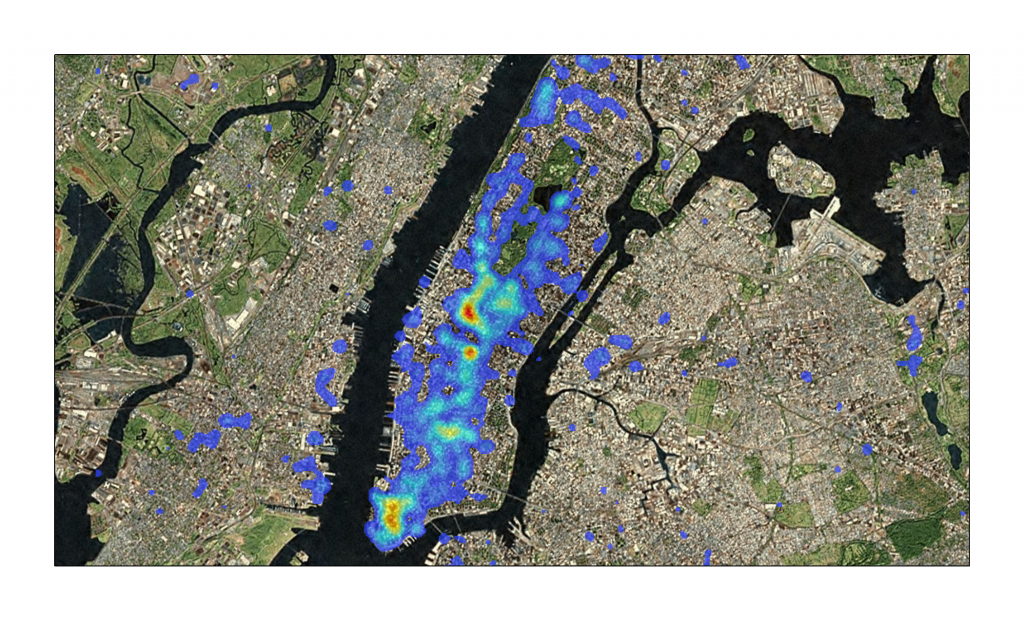
There are many ways to gauge importance from a social and cultural sense, such as calculating the centrality of the Salt Lake City Airport in a network made up of world airports, or measuring the number and type of notable individuals a city produces. We struggle with just such a question of metrics all the time in the digital humanities, and so I’ve experimented with several more off-the-wall measures. One that I think provides a sense of cultural density, especially in the English-speaking world, is a measure of the quantity of Wikipedia articles associated with a place. It’s very rough, and meant to be one of the ever-useful “gestures” at meaning that are used in the humanities (while the sciences have perfected the proxy, the gesture is truly the most valuable humanities commodity).

Source : A Map to Nowhere | Digital Humanities Specialist

Taha Yasseri of the Oxford Internet Institute and colleagues looked at Wikipedia’s different language editions from their inception (January 2001 for English) to March 2010 and ranked the most contested articles, based on the number of reverts and the number of edits the contributors have made (dubbed their “maturity score”). The results in some ways confirm cultural stereotypes. Americans bicker over politics and professional wrestling; among the top French squabbles is Freud.

Source : Daily chart: Edit wars | The Economist

“Histography » is interactive timeline that spans across 14 billion years of history, from the Big Bang to 2015.The site draws historical events from Wikipedia and self-updates daily with new recorded events.The interface allows for users to view between decades to millions of years.The viewer can choose to watch a variety of events which have happened in a particular period or to target a specific event in time. For example you can look at the past century within the categories of war and inventions.Histography was created as a final project in Bezalel Academy of Arts and Design. Guided by Ronel Mor – histography.io

Source : Histography – Matan Stauber

Wikipedia editors revolt, vote “no confidence” in newest board member | Ars Technica

The editors object to Geshuri’s involvement in a high-profile « no poach » agreement between several large tech companies. In that deal, companies agreed not to « cold call » each others’ workers. In 2010, the Department of Justice said the arrangement—which applied to Google, Apple, Adobe, Intuit, Intel, and Pixar, among others—violated antitrust law.

Source : Wikipedia editors revolt, vote “no confidence” in newest board member | Ars Technica

Accroître et enrichir les contenus sur le Québec et son histoire dans Wikipédia, rendre disponibles dans Wikisource nos grands textes historiques et littéraires qui sont du domaine public, diffuser dans Wikimedia Commons des contenus visuels qui expriment la créativité de nos artistes, voilà le grand défi que nous devons aujourd’hui relever si nous voulons exister et être reconnus dans le monde. La nation québécoise peut-elle se permettre de manquer le bateau de la plus grande entreprise de partage et de diffusion des connaissances de l’histoire de l’humanité ?

Source : Le Québec, parent pauvre de Wikipédia | Le Devoir

« Older posts Newer posts »

© 2026 no-Flux

Theme by Anders NorenUp ↑