
As society turns to Wikipedia for answers, students, educators, and citizens should understand its limitations when researching scientific topics that are politically charged. On entries subject to edit-wars, like acid rain, evolution, and global change, one can obtain – within seconds – diametrically different information on the same topic.
Étiquette : vulnerability (Page 37 of 40)

DroidJack gives you the power to establish control over your beloveds’ Android devices with an easy to use GUI and all the features you need to monitor them.
The court held that our complaint did not plausibly allege that the NSA was monitoring our or other plaintiffs’ communications.

La peur d’un procès aurait attisé les divergences stratégiques déjà présentes entre les développeurs : l’un des points de discorde était un VPN, un service de protection codéveloppé par Wally, afin d’offrir aux internautes la possibilité de ne pas être visibles des instances de contrôle du téléchargement illégal, comme la Hadopi française.
Ce système, payant, était dangereux aux yeux de certains membres de l’équipe : ces derniers étaient persuadés que l’absence de revenus du service gratuit était une des meilleures défenses juridiques de PopcornTime.io en cas de procès. Wally a eu beau affirmer ne pas « vouloir faire de l’argent » et chercher à assurer la pérennité de son service, le divorce était consommé.
Source : Popcorn Time : les déboires du « Netflix du piratage »
Russian submarines and spy ships are aggressively operating near the vital undersea cables that carry almost all global Internet communications, raising concerns among some American military and intelligence officials that the Russians might be planning to attack those lines in times of tension or conflict.
Source : Russian Ships Near Data Cables Are Too Close for U.S. Comfort – The New York Times
Today, 21 October 2015 and over the coming days WikiLeaks is releasing documents from one of CIA chief John Brennan’s non-government email accounts. Brennan used the account occasionally for several intelligence related projects.
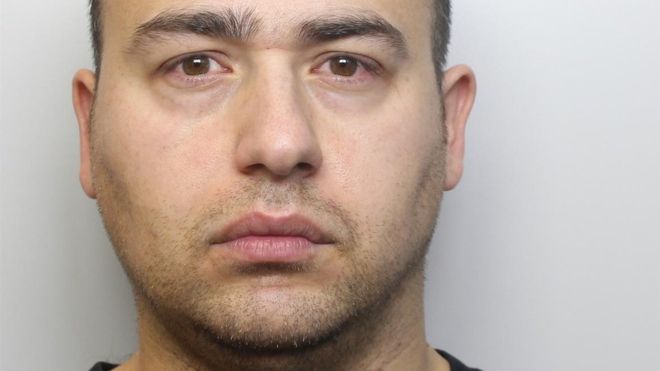
Investigators from the National Crime Agency found images on the computer of Stefan Rigo, 34, including ones of people involved in sexual activity.
Rigo targeted a variety of victims after gaining remote access to their computers’ webcams. Incriminating images on his computer were discovered after a forensic examination. Out of 14 confirmed individuals he spied on – roughly half were people he knew personally.
Source : Webcam hacker spied on sex acts with BlackShades malware – BBC News

Last week, T-Mobile revealed that hackers had stolen records for “approximately” 15 million people. How approximate? If history is any guide, very approximate.
Source : Never trust the first number announced in a data breach – Quartz

A man handed six years for threatening a local Georgia court clerk that he would post a sex tape of her on Facebook had his conviction overturned by the state’s Supreme Court. The justices ruled Monday that the Facebook postings did not constitute criminality or a « true threat » under the law, because the defendant did not express an « intent to commit an act of unlawful violence. »
Source : Threatening to post sex tape on Facebook is not a crime, court rules | Ars Technica

La croyance partagée que toutes les installations nucléaires sont isolées de l’Internet public est un mythe
Source : Les risques de cyberattaques contre les centrales nucléaires se multiplient