“Déployés depuis un mois, ces panneaux ne permettent pas encore de faire un premier bilan chiffré, mais pour l’hypermarché, les perspectives sont séduisantes. « C’est une nouvelle façon de communiquer avec le client, et pour nous d’obtenir des informations utiles pour le commerce. Le client est déjà sur place, on va lui proposer un produit susceptible de lui plaire, et ça peut être un déclencheur d’achat », explique Lisa Savey, responsable marketing clients chez Leclerc, à Thionville (Moselle). Au-delà de la reconnaissance faciale, les bornes mesurent le temps d’attention d’un consommateur. Plus celui-ci est long, plus il promet de déclencher un achat.”
Étiquette : targeted advertising (Page 1 of 7)

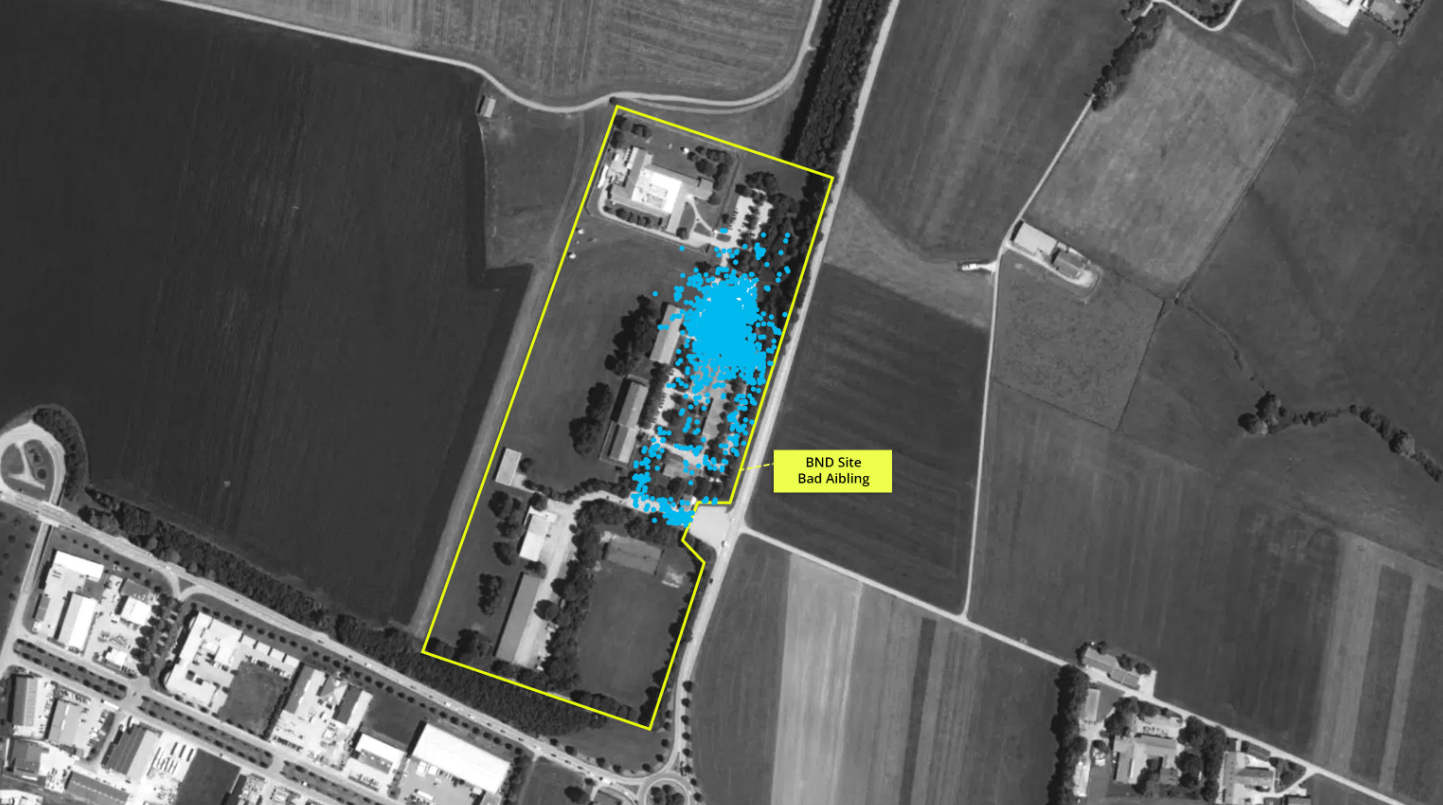
“L’été dernier, Bayerischer Rundfunk (BR, le service public audiovisuel de la Bavière) et le média indépendant netzpolitik.org, défenseur des libertés numériques, ont ainsi révélé, dans toute une série d’articles, qu’il était possible de géolocaliser des personnes à l’intérieur de bâtiments de l’armée et des services de renseignement allemands.Après un bref appel téléphonique, Sebastian Meineck, de netzpolitik.org, avait en effet réussi à obtenir, de la part d’un courtier de données états-unien, un fichier comportant 3,6 milliards de points de localisations collectés sur une période d’environ huit semaines fin 2023.Le fichier lui avait été fourni gratuitement à titre d’échantillon via Datarade, une place de marché en ligne basée à Berlin de mise en relation avec plus de 500 databrokers internationaux, commercialisant près de 600 catégories de données. Un abonnement comprenant des données de localisation mises à jour toutes les heures pour des personnes résidant dans plus de 150 pays lui aurait coûté 14 000 dollars par mois.”
Source : ADINT : les marchands de pub vendent aussi les données GPS de militaires et d’espions – Next

“During the ad campaign, first revealed in an FT investigation published in August, staff at Google were helping Meta bypass the search company’s policies on how online advertising can be directed to minors. While Google bans ad personalisation for teens, the campaign for Instagram on YouTube deliberately pushed messages to a group of users labelled as “unknown” in its system. Google employees told Meta that it had internal data that showed this group skewed towards under-18s and was a way of “hacking” the audience safeguards in their system.”
Source : Brussels probes Google and Meta secret ads deal to target teens
“On 27 October, the European Data Protection Board adopted an urgent binding decision instructing the Irish (IE) DPA as lead supervisory authority (LSA) to take, within two weeks, final measures regarding Meta Ireland Limited (Meta IE) and to impose a ban on the processing of personal data for behavioural advertising on the legal bases of contract and legitimate interest across the entire European Economic Area (EEA). The urgent binding decision followed a request from the Norwegian Data Protection Authority (NO DPA) to take final measures in this matter that would have effect in the entire European Economic Area (EEA).”
“Matthew Green, a cryptography professor at Johns Hopkins University in the US, just encountered the popup and expressed his dismay.
« I don’t want my browser keeping track of my browsing history to help serve me ads, and I definitely don’t want my browser sharing any function of my browsing history with every random website I visit, » he said via Twitter.
And VC Paul Graham has derided ad targeting tech as spyware. Google has offered repeated reassurances that its Topics API does not allow companies to identify those whose interests inform its ad API. But some developers claim Topics may be useful for browser fingerprinting and both Apple and Mozilla have said they won’t adopt Topics due to privacy concerns.”
Source : Google Chrome pushes browser history-based ad targeting • The Register

“Now, all smart TVs come with ads. But you still pay for the TV. All of that changes today. During the signup process we ask questions about you and your household to optimize your ad experience. Brands in turn, pay for the non-intrusive ad on the Smart Screen. That’s how you get Telly free. Plain and simple. It’s time you got cut in on the deal.”
Source : Telly I The biggest thing to happen to TV since color.

“J’ai travaillé pour Google, au département d’intelligence artificielle, et ce domaine ne fait pas gagner d’argent à l’entreprise. Il est financé grâce aux revenus publicitaires. La plupart des services que nous utilisons – Gmail ou les réseaux sociaux par exemple – sont financés par la pub. Si la bulle devait exploser, de nombreux secteurs de l’économie dépendant de la pub en ligne, comme les médias, seraient touchés. Des journalistes perdraient leur emploi. Des services gratuits ne pourraient plus l’être. Tout un modèle serait remis en cause. La machine à cash d’Internet ne fonctionnerait plus.”
Source : Usbek & Rica – « Le business de la pub en ligne est bâti sur une fiction : son efficacité »

“It seems that in the United States, at least, app developers and advertisers who rely on targeted mobile advertising for revenue are seeing their worst fears realized: Analytics data published this week suggests that US users choose to opt out of tracking 96 percent of the time in the wake of iOS 14.5.”
Source : 96% of US users opt out of app tracking in iOS 14.5, analytics find | Ars Technica

“Est-ce légal de demander aux internautes de payer une petite somme chaque mois, par exemple deux euros, pour ne pas avoir de cookies publicitaires ? C’est en quelque sorte la question qui est en train d’émerger, notamment sur les réseaux sociaux. En effet, des internautes ont été interloqués de voir qu’en se rendant sur des sites, il peut leur être demandé de payer pour échapper à la publicité ciblée.”
Source : Payer pour éviter les cookies publicitaires, est-ce légal ?

“Advances in aggregation, anonymization, on-device processing and other privacy-preserving technologies offer a clear path to replacing individual identifiers. In fact, our latest tests of FLoC show one way to effectively take third-party cookies out of the advertising equation and instead hide individuals within large crowds of people with common interests. Chrome intends to make FLoC-based cohorts available for public testing through origin trials with its next release this month, and we expect to begin testing FLoC-based cohorts with advertisers in Google Ads in Q2. Chrome also will offer the first iteration of new user controls in April and will expand on these controls in future releases, as more proposals reach the origin trial stage, and they receive more feedback from end users and the industry. This points to a future where there is no need to sacrifice relevant advertising and monetization in order to deliver a private and secure experience. ”
Source : Google charts a course towards a more privacy-first web