Étiquette : failure (Page 8 of 15)

«We mask passwords through a process called hashing using a function known as bcrypt, which replaces the actual password with a random set of numbers and letters that are stored in Twitter’s system. This allows our systems to validate your account credentials without revealing your password. This is an industry standard.   Due to a bug, passwords were written to an internal log before completing the hashing process. We found this error ourselves, removed the passwords, and are implementing plans to prevent this bug from happening again».

Source : Keeping your account secure

Tim Berners-Lee

«Les données personnelles ne sont pas le nouveau pétrole. Si je vous donne mes données, ce n’est pas comme du pétrole, ce n’est pas comme de l’eau, je les ai encore. Ce sont les miennes. […] Si vous les envoyez dans le cloud à un tiers, comme une compagnie d’assurance, je suis juste un point pour eux. Mais, moi, je suis moi, et je veux garder le contrôle» – Tim Berners Lee.

Source : L’inventeur du Web exhorte à réguler l’intelligence artificielle

«Chat is a carrier-based service, not a Google service. It’s just “Chat,” not “Google Chat.” In a sign of its strategic importance to Google, the company has spearheaded development on the new standard, so that every carrier’s Chat services will be interoperable. But, like SMS, Chat won’t be end-to-end encrypted, and it will follow the same legal intercept standards. In other words: it won’t be as secure as iMessage or Signal».

Source : Exclusive: Chat is Google’s next big fix for Android’s messaging mess – The Verge

«Two myths currently limit our collective imagination: the myth that advertising is the only possible business model for online companies, and the myth that it’s too late to change the way platforms operate. On both points, we need to be a little more creative. While the problems facing the web are complex and large, I think we should see them as bugs: problems with existing code and software systems that have been created by people — and can be fixed by people» – Tim Berners-Lee.

Source : The web is under threat. Join us and fight for it. – World Wide Web Foundation

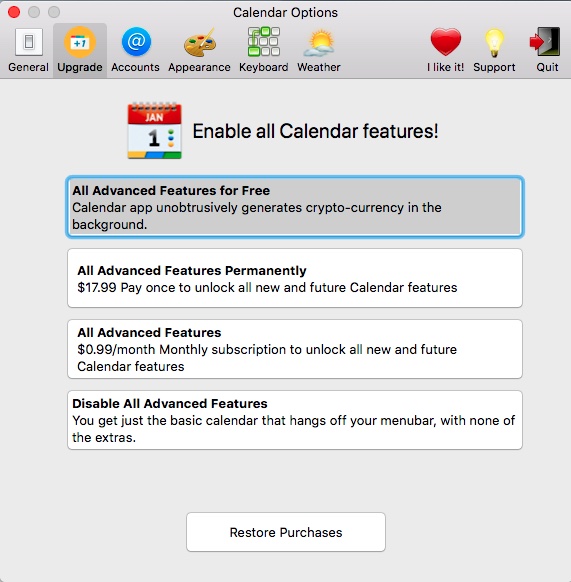
Calendar 2

«We have decided to REMOVE the miner in the app. The next version will remove the option to get free features via mining. This is for three reasons: 1) The company which provided us the miner library did not disclose its source code, and it would take too long for them to fix the root cause of the CPU issue. 2) The rollout had a perfect storm of bugs which made it seem like our company *wanted* to mine crypto-currency without people’s permission, and that goes against our whole ethos and vision for Qbix. 3) My own personal feeling that Proof of Work has a dangerous set of incentives which can lead to electricity waste on a global scale we’ve never seen before» – Magarshak (Calandar 2).

Source : There’s a currency miner in the Mac App Store, and Apple seems OK with it | Ars Technica

Intel CPU

«Le fait que la vente des parts coïncide exactement avec ce qu’il peut vendre et son timing maintenant que nous commençons à être au courant de la faille qui touche les processeurs Intel fait planer le doute. A-t-il vendu à un moment où le cours de son entreprise était au plus haut, anticipant une baisse de la valeur de l’action quand l’affaire serait dévoilée ? Difficile à dire pour l’instant, mais le mouvement qui aurait pu paraître anodin dans un autre contexte n’échappera pas aux actionnaires de l’entreprise qui pourraient demander une enquête».

Source : Faille sur les processeurs Intel : quelles protections, quelles conséquences possibles – Tech – Numerama

« Older posts Newer posts »

© 2026 no-Flux

Theme by Anders NorenUp ↑