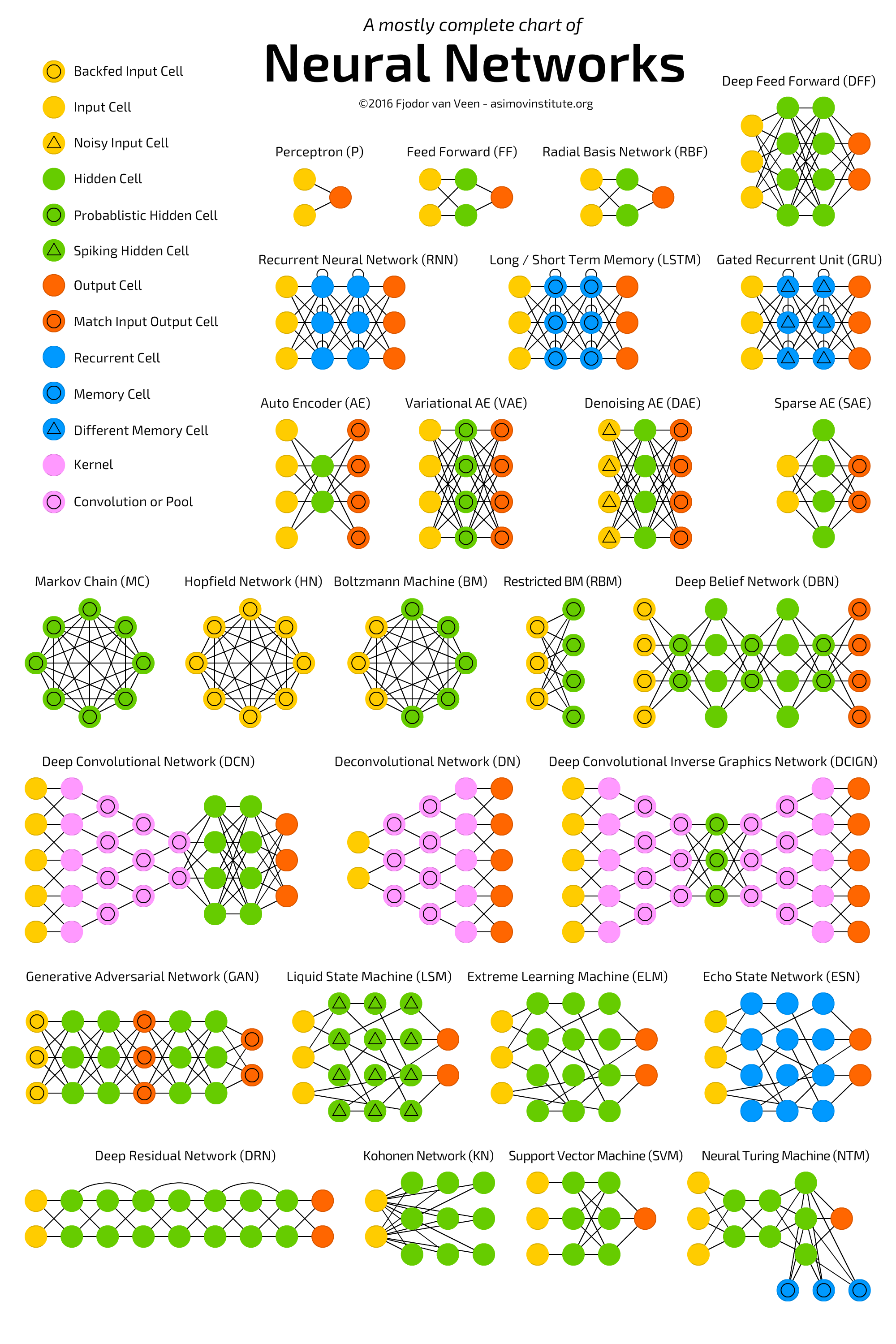
“Over the past few months, I have been collecting AI cheat sheets. From time to time I share them with friends and colleagues and recently I have been getting asked a lot, so I decided to organize and share the entire collection.”
“At Intelligence Squared U.S., we’ve debated AI before – the risks, the rewards, and whether it can change the world – but for the first time, we’re debating with AI. ”
“After training our agents for an additional week, we played against MaNa, one of the world’s strongest StarCraft II players, and among the 10 strongest Protoss players. AlphaStar again won by 5 games to 0, demonstrating strong micro and macro-strategic skills. “I was impressed to see AlphaStar pull off advanced moves and different strategies across almost every game, using a very human style of gameplay I wouldn’t have expected,” he said. “I’ve realised how much my gameplay relies on forcing mistakes and being able to exploit human reactions, so this has put the game in a whole new light for me. We’re all excited to see what comes next.”
“Smart Compose is an example of what AI developers call natural language generation (NLG), in which computers learn to write sentences by studying patterns and relationships between words in literature, emails and web pages. A system shown billions of human sentences becomes adept at completing common phrases but is limited by generalities. Men have long dominated fields such as finance and science, for example, so the technology would conclude from the data that an investor or engineer is “he” or “him.” The issue trips up nearly every major tech company. ”
“Haha. C’est vrai, j’ai le permis mais je n’ai pas pris le volant depuis quinze ans. Je suis trop dangereux et ma famille me l’interdit. Je suis le client parfait pour les voitures autonomes, qui quel que soit leur niveau de sécurité, conduiront toujours mieux que moi.”
“The members of Obvious don’t deny that they borrowed substantially from Barrat’s code, but until recently, they didn’t publicize that fact either. This has created unease for some members of the AI art community, which is open and collaborative and taking its first steps into mainstream attention. Seeing an AI portrait on sale at Christie’s is a milestone that elevates the entire community, but has this event been hijacked by outsiders?”
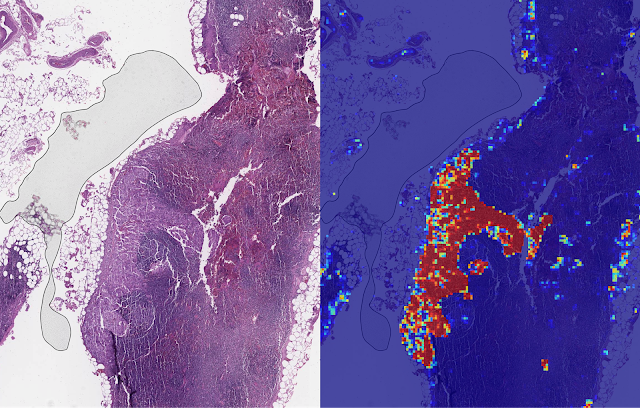
“In both datasets, LYNA was able to correctly distinguish a slide with metastatic cancer from a slide without cancer 99% of the time. Further, LYNA was able to accurately pinpoint the location of both cancers and other suspicious regions within each slide, some of which were too small to be consistently detected by pathologists. As such, we reasoned that one potential benefit of LYNA could be to highlight these areas of concern for pathologists to review and determine the final diagnosis.”
“California governor Jerry Brown signed regulations into law last Friday (Sept. 30) that should make it easier for Californians to know whether they’re speaking to a human or a bot. The new law goes into effect on July 1, 2019—Botageddon, as we’re going to call it—and could have far-reaching consequences for how automated systems communicate with people online. It will require companies to disclose whether they are using a bot to communicate with the public on the internet (something like “Hi, I’m a bot.”)”
“Ryan Germick est responsable du développement de l’intelligence artificielle de l’enceinte Google Home. Pour lui conférer de l’empathie et de l’humour, il s’est entouré de comédiens, d’artistes en improvisation, de journalistes satiriques et de dialoguistes recrutés auprès du Studio Pixar. «Il faut tout un village pour élever une assistante virtuelle», explique-t-il sur le site de CNBC. Ainsi avec son équipe, ils ont réussi à créer une personnalité amicale, qu’ils décrivent comme une sorte de bibliothécaire excentrique et intello.”