
Technology news needs a reboot. There are more stories and outlets than ever, but a troubling cycle is playing out: The race for pageviews and ad dollars is causing publications to focus on quantity over quality.
Page 411 of 629

« The long-coveted « dislike » button may never make its way Facebook. But a Facebook engineer said Thursday that the social network has informally experimented with an alternative to « like »: specifically, the « sympathize » button ». (via Facebookers Like The Idea Of A ‘Sympathize’ Button (Keep Waiting For ‘Dislike’))
Reform Government Surveillance
« The undersigned companies believe that it is time for the world’s governments to address the practices and laws regulating government surveillance of individuals and access to their information ».
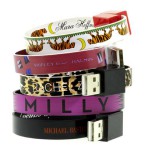
(via Designer USB Bracelet)
Les forces de l’ordre du Land de Saxe ont, en effet, développé un logiciel décliné en application mobile capable de détecter en quelques secondes une chanson à la gloire de l’idéologie du IIIe Reich, a confirmé à FRANCE 24 l’Agence régionale de lutte contre la criminalité de Saxe. Cette innovation, actuellement encore à l’état de prototype, fonctionne sur le principe de l’application d’identification de musique Shazam : il suffit de tenir son smartphone en l’air, lancer l’appli “Digital Audio Fingerprint” et attendre qu’elle vérifie si la chanson captée correspond à l’un des titres interdits de sa base de données. Si c’est le cas, les forces de l’ordre pourraient alors interrompre un concert, effacer la musique interdite d’un ordinateur et interroger ceux qui la diffusent.
The NSA has no reason to suspect that the movements of the overwhelming majority of cellphone users would be relevant to national security. Rather, it collects locations in bulk because its most powerful analytic tools — known collectively as CO-TRAVELER — allow it to look for unknown associates of known intelligence targets by tracking people whose movements intersect.

« Terra Incognita visualizes how Wikipedia has evolved over the last decade, mapping the geographic articles for 50 languages. The maps highlight cultural biases, unexpected areas of focus, the overlaps between languages, and regions that are unique to a language ». (via Terra Incognita | visualizing.org)
On leur a donné beaucoup de fric et ils s’en sont bien servi