
“Imagine a world in which you travel long distances without the need for airports. A world in which you can avoid airport security, hours of queuing and waiting, and noisy, cramped airliners. What if, instead, you could take your own first-class private cabin that picks you up at home and takes you from door to door?”
Page 112 of 626
via ProZD
“The inability of intelligence and law enforcement agencies to lawfully access encrypted data and communications poses challenges to law enforcement agencies’ efforts to protect our communities. Therefore, we agreed to the urgent need for law enforcement to gain targeted access to data, subject to strict safeguards, legal limitations, and respective domestic consultations”.
Source : Five Country Ministerial 2018

“In meetings with marketers, Oath representatives have acknowledged that many people use Yahoo Mail as their primary service for unwanted commercial email, one of the people who heard the pitch said. They indicated this is an advantage for advertisers who want to collect as much commercial data on users as possible, the person said”.
Source : Yahoo, Bucking Industry, Scans Emails for Data to Sell Advertisers – WSJ
“Avec Galileo, les informations de positionnement fournies par nos smartphones sont plus précises et plus fiables, en particulier dans les environnements urbains où l’étroitesse des rues et la taille des immeubles bloquent souvent les signaux satellites et limitent l’utilité de nombreux services mobiles”.
Source : UseGalileo

“One of the signals we use is how people interact with articles,” Lyons said in a follow-up email. “For example, if someone previously gave us feedback that an article was false and the article was confirmed false by a fact-checker, then we might weight that person’s future false-news feedback more than someone who indiscriminately provides false-news feedback on lots of articles, including ones that end up being rated as true.” The score is one signal among many that the company feeds into more algorithms.
Source : Facebook is rating the trustworthiness of its users on a scale from zero to 1 – The Washington Post
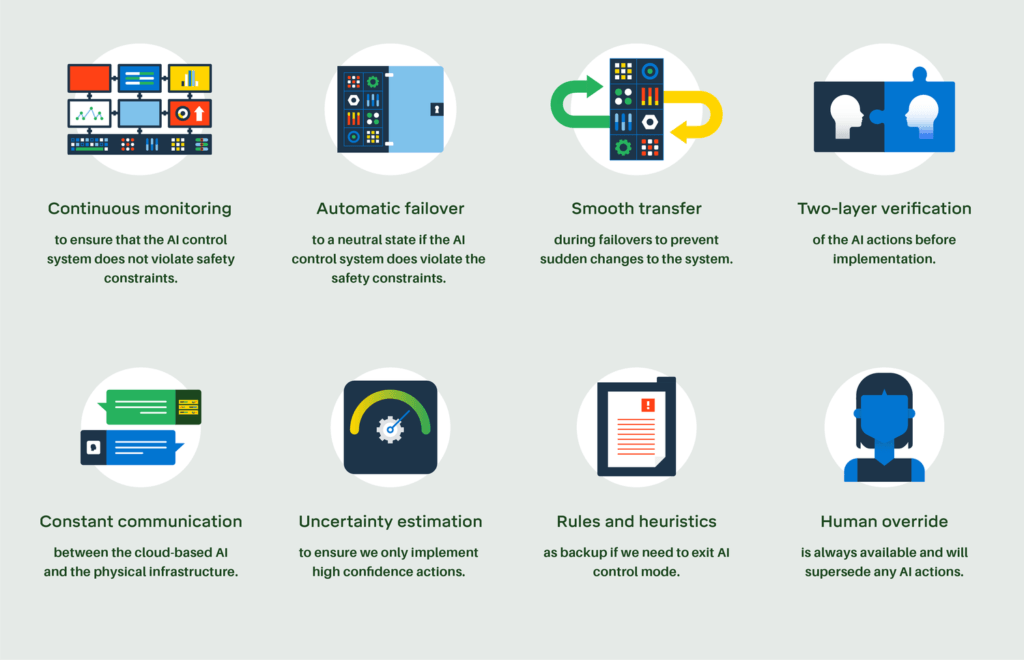
“Google et DeepMind ont convenu de bien délimiter le champ d’action des algorithmes d’optimisation afin d’éviter un incident d’exploitation. « Nos opérateurs sont toujours en contrôle et peuvent choisir de quitter le mode de contrôle de l’IA à tout moment. Dans ces scénarios, le système de contrôle passera du contrôle de l’intelligence artificielle aux règles et heuristiques sur site qui définissent aujourd’hui l’industrie de l’automatisation », précise la société. En suivant ce chemin, il s’avère que Google a réduit sa facture électrique : en moyenne, l’entreprise dit avoir obtenu des économies d’énergie de 30 % alors que le mécanisme n’est déployé que depuis quelques mois”.
“Wordpress.com, la principale plate-forme d’hébergement de sites Web dans le monde, a supprimé ces derniers jours plusieurs sites conspirationnistes liés au massacre de Sandy Hook, dans lequel vingt-huit personnes dont vingt enfants avaient été tués en 2012. Aux Etats-Unis, une théorie du complot, popularisée notamment par le présentateur d’extrême droite Alex Jones, prétend que ce massacre ne s’est jamais produit, et que les victimes étaient en réalité des acteurs payés par le gouvernement”.
Source : WordPress.com supprime plusieurs blogs conspirationnistes

“S’ils peuvent pour partie prêter à sourire, ces exemples rappellent l’importance de s’interroger sur l’origine des informations qui circulent en ligne. En particulier face à des comptes anonymes, dont la démarche n’est pas toujours explicite”.
Source : Ce que révèlent les changements de noms des pages Facebook

“Car makers are collecting massive amounts of data from the latest cars on the road. Now, they’re figuring out how to make money off it. With millions of cars rolling off dealer lots with built-in connectivity, auto companies are gaining access to unprecedented amounts of real-time data that allow them to track everything from where a car is located to how hard it is braking and whether or not the windshield wipers are on.
The data is generated by the car’s onboard sensors and computers, and then stored by the auto maker in cloud-based servers. Some new cars have as many as 100 built-in processors that generate data”.
Source : What Your Car Knows About You – WSJ